












Microgrid Smart Energy Platform
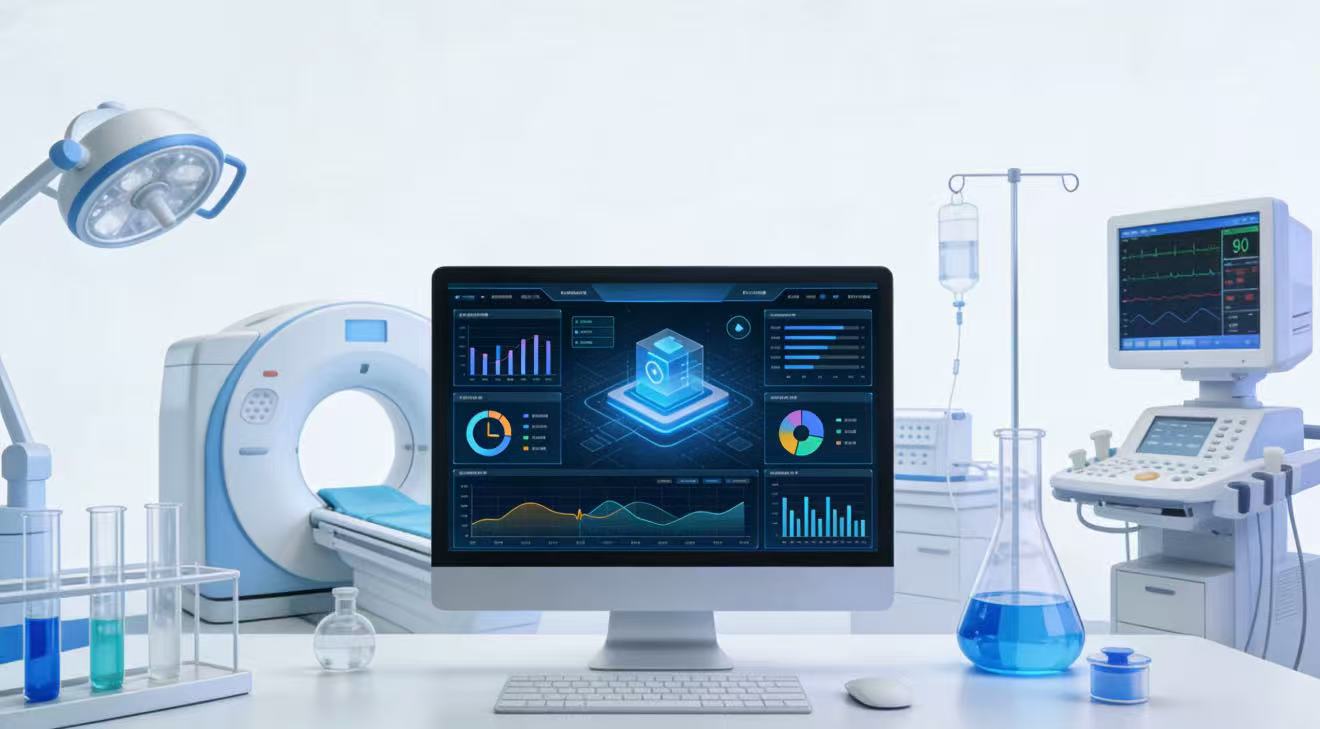
Acrel solutions cover power, renewable energy, environmental protection, fire protection, and other industries, including data centers, hospitals, smart buildings, campuses, factories, transportation, and others. Acrel provides solutions for users' safe, reliable, efficient, and orderly energy use, achieving peak carbon and carbon neutrality, and providing data support.
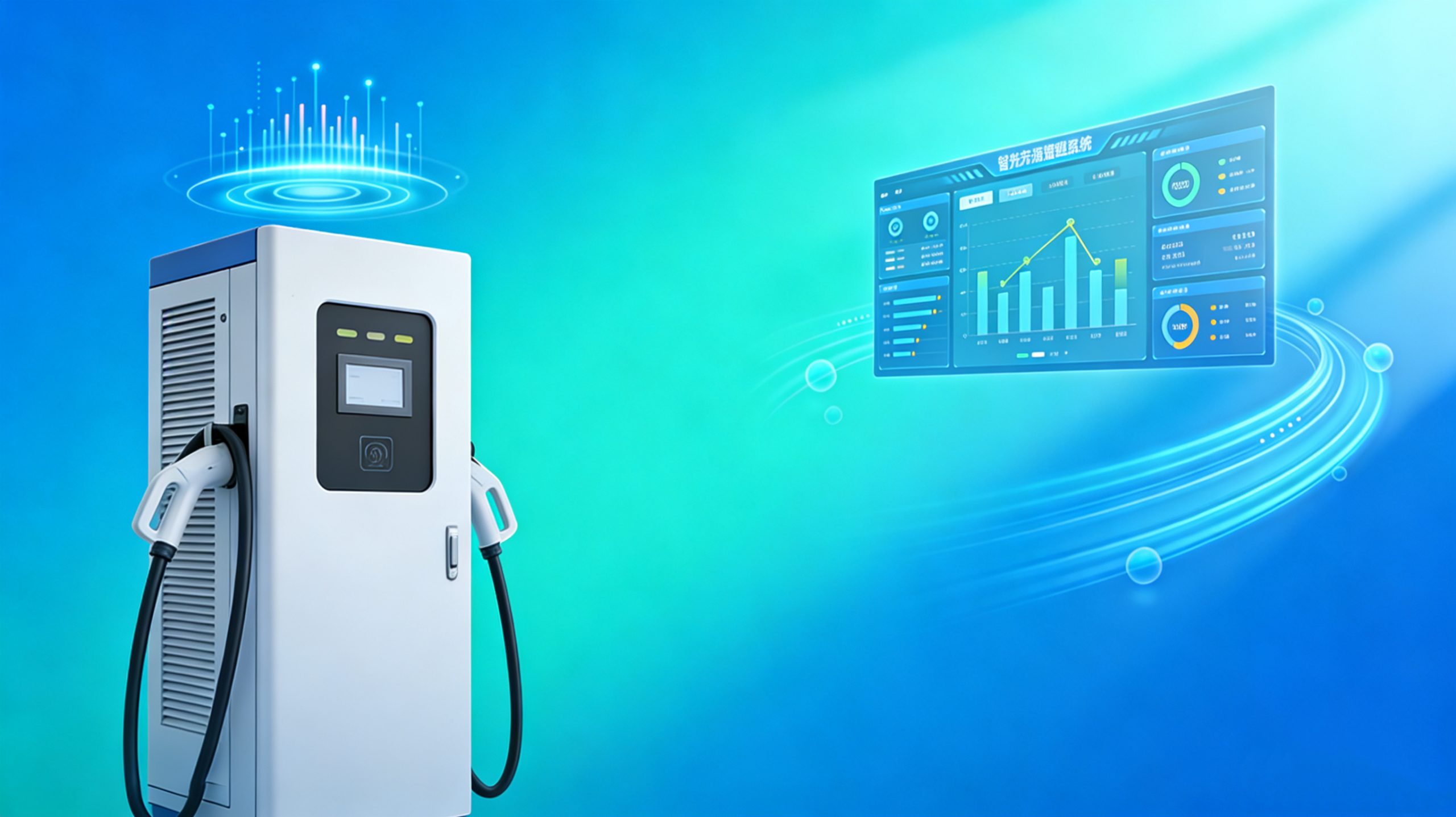
The Microgrid Smart Energy Management Platform is a system that integrates modern information technologies such as the Internet of Things (IoT), big data, cloud computing and artificial intelligence (AI) to monitor, control and optimize energy consumption to improve efficiency and reduce waste.
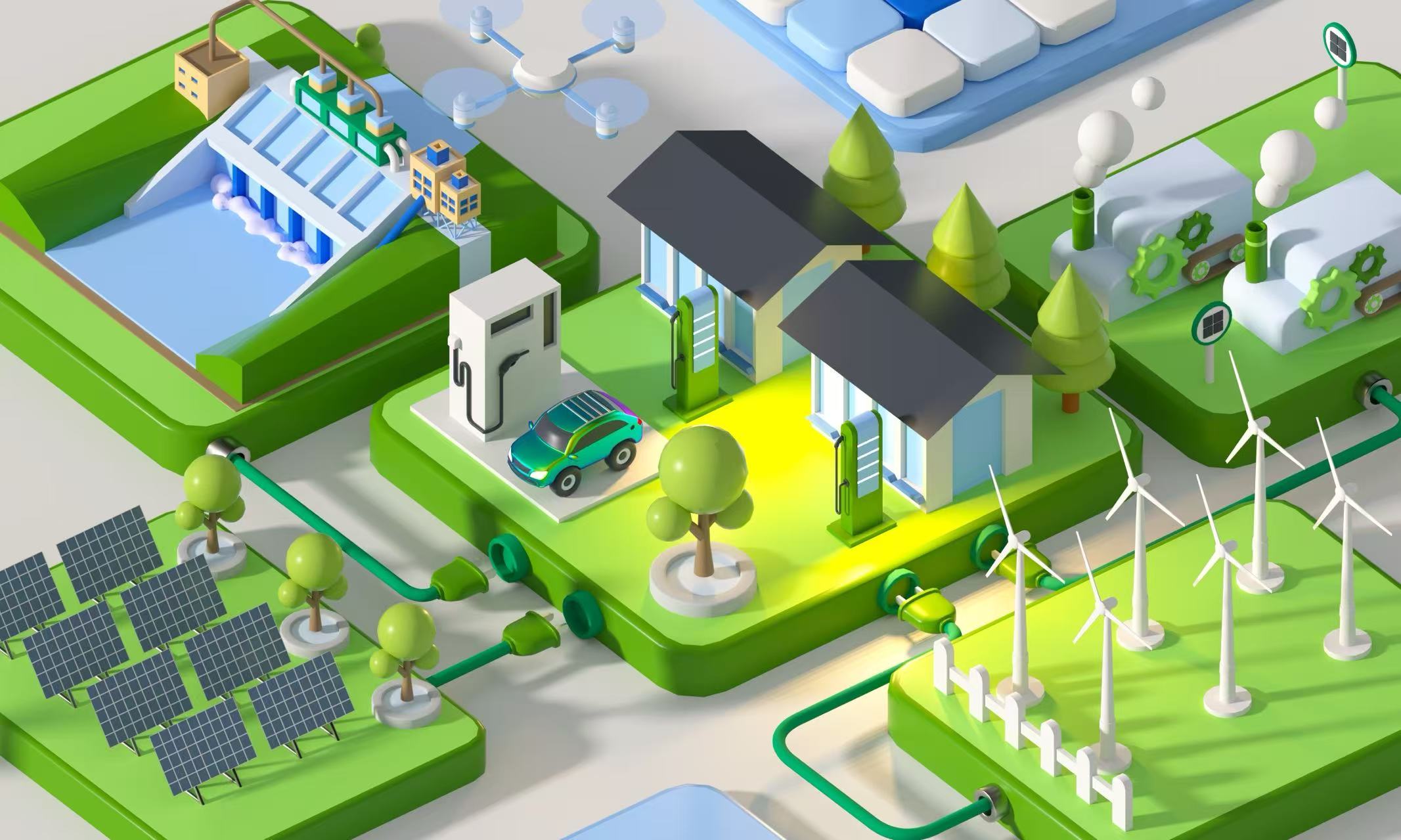
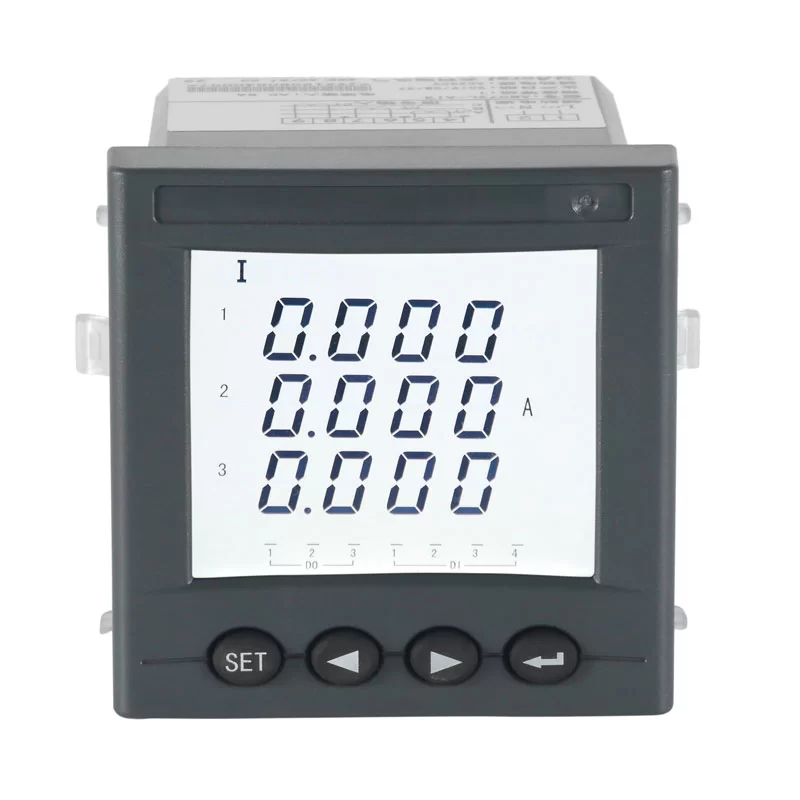
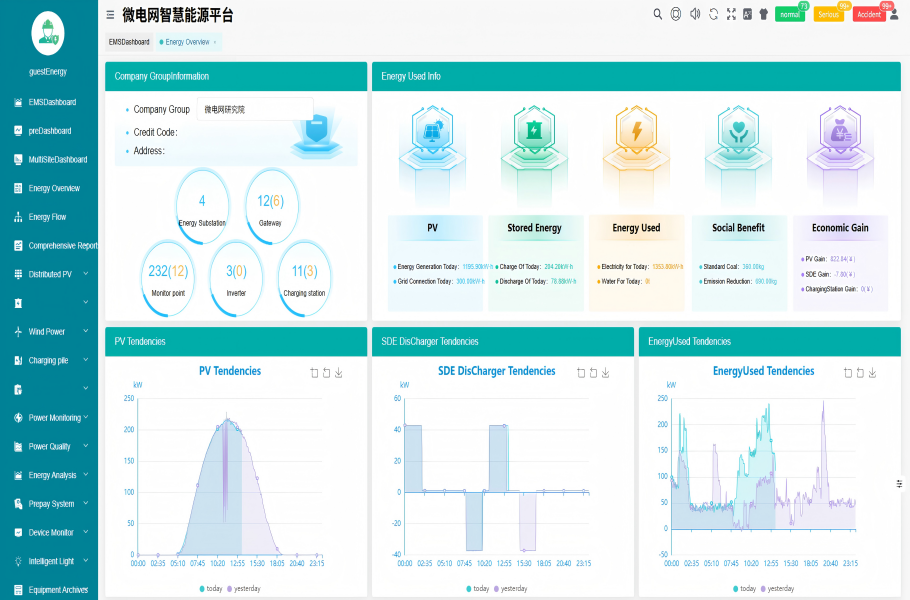
The Acrel-2000MG microgrid energy management system enables the integration of photovoltaic systems, energy storage systems, charging stations, diesel generators, consumer loads, and other devices, and performs 24/7 data collection and analysis. It monitors the operating status and health of photovoltaic systems, energy storage systems, diesel generators, consumers, and other systems, serving as a comprehensive management system that integrates monitoring and energy management. This system aims to achieve economic optimization based on safety and stability, promotes the use of renewable energy, peak load shaving, load leveling, improves grid operating stability and equipment operating efficiency, and reduces power costs. It provides a new solution for the safe, reliable, and economical operation of enterprise microgrids.
-

FULL
-

SECURE
-

VISUALLY
-
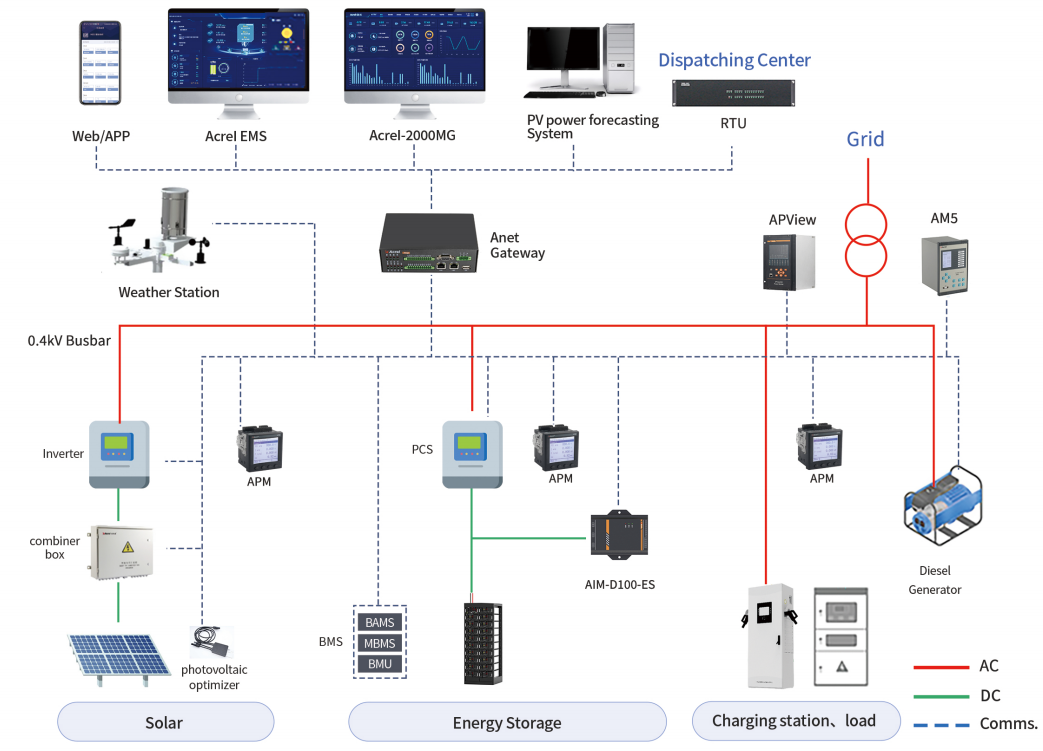
On-grid structure
The microgrid energy management system essentially consists of a server, a switch, a communication management system, and other devices. It communicates via Ethernet with photovoltaic, wind, charging, and energy storage systems, enabling comprehensive energy management, device monitoring, and other functions.
-
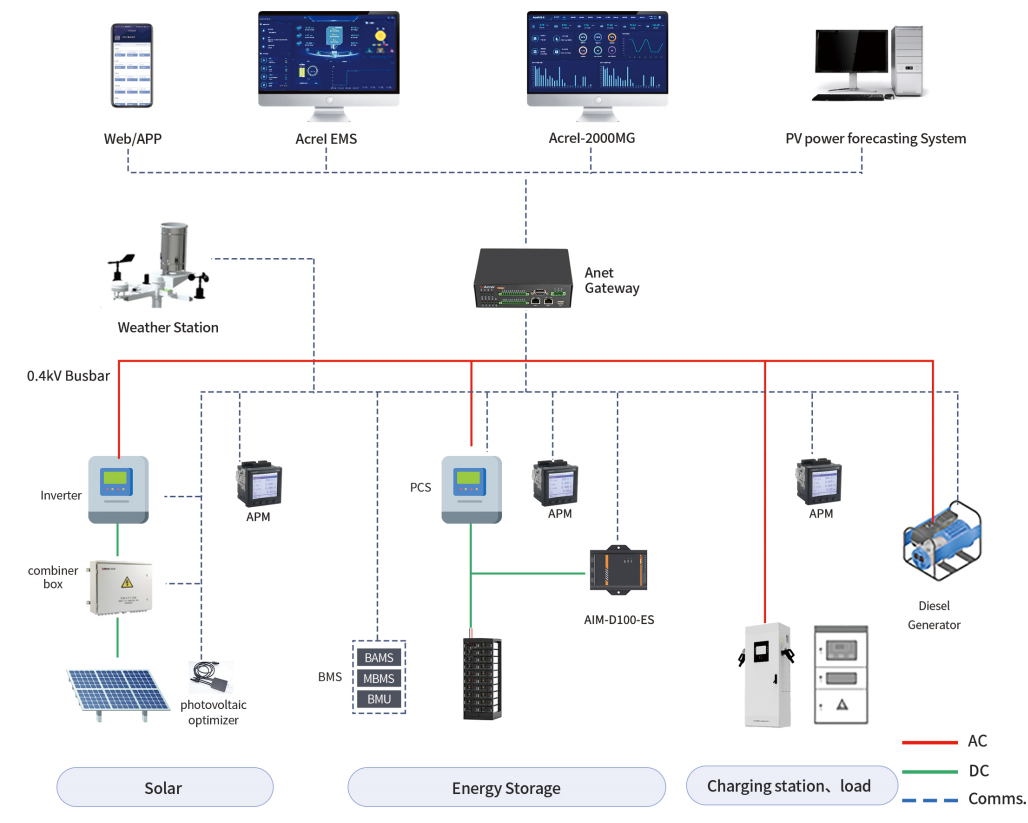
Off-grid structure
The system features sophisticated battery management functions and extensive external communication interfaces, enabling real-time monitoring and control of the operating data of energy storage systems, charging systems, photovoltaic and wind turbine systems, and other smart devices. This includes the acquisition of information such as voltage, current, temperature, pressure, flow, etc. in the energy storage system, real-time monitoring, optional management, intelligent maintenance, and information query functions.
Advantages
-
Dashboard:
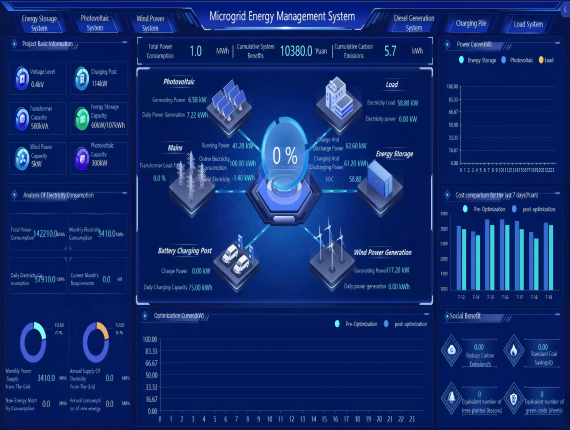
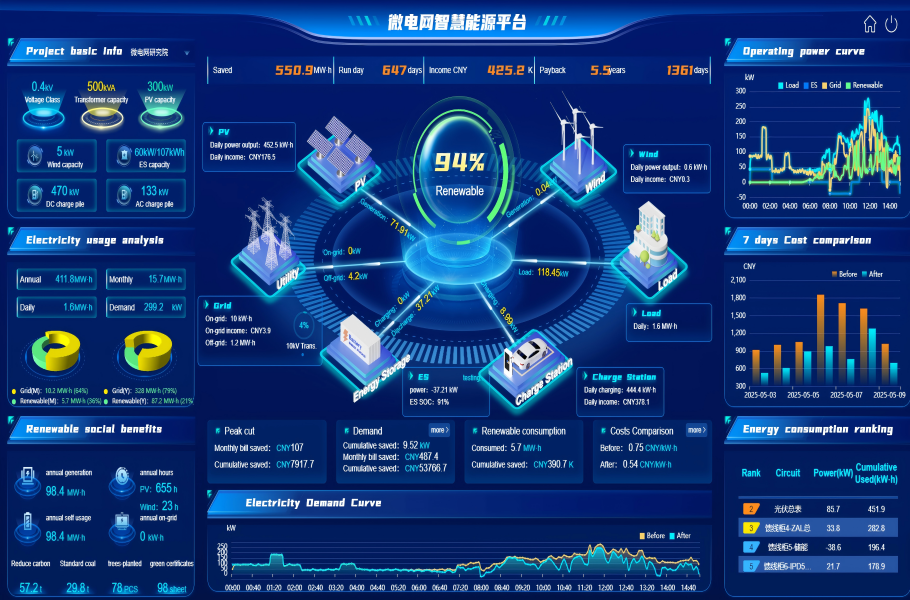
It enables the collection, monitoring and visualization of data such as microgrid photovoltaics, wind power, energy storage, load, charging stations and environment, as well as functions such as alarms for unusual events and sales statistics.
-
Energy storage system:
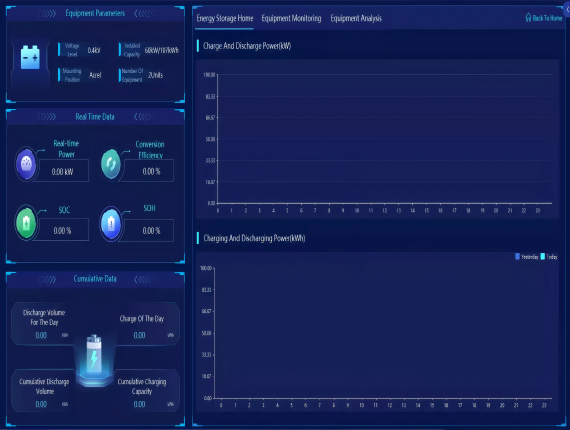
1. Measurement and monitoring: Operating mode, power control mode, predefined value information such as power, voltage, current, frequency, etc., charging and discharging voltage of the storage battery, current, SOC, temperature, pressure and capacity of the energy storage battery.
2. Status alarm data: Charging/discharging status, AC/DC overvoltage/undervoltage, AC/DC overcurrent, overfrequency/underfrequency alarm, overtemperature, overload, leakage protection and other parameters of the energy storage battery.
3. Performance data: Battery capacity
4. Setup data: PCS on/off, power settings, running parameter settings -
Photovoltaic power system:
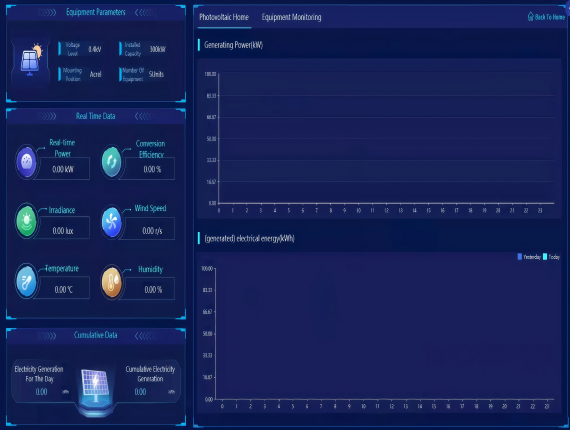
1. Measurement monitoring: Environmental information such as sunshine, temperature and wind speed, PV panel temperature, DC voltage, DC current, inverter power, etc.
2. Status monitoring: AC/DC overvoltage/undervoltage, AC/DC overcurrent, overfrequency/underfrequency alarm, overtemperature, overload, leakage protection, etc.
3. Capacity monitoring: Real-time PV generation capacity, total capacity, etc.
4. Remote control: Inverter start, stop -
Wind turbine:
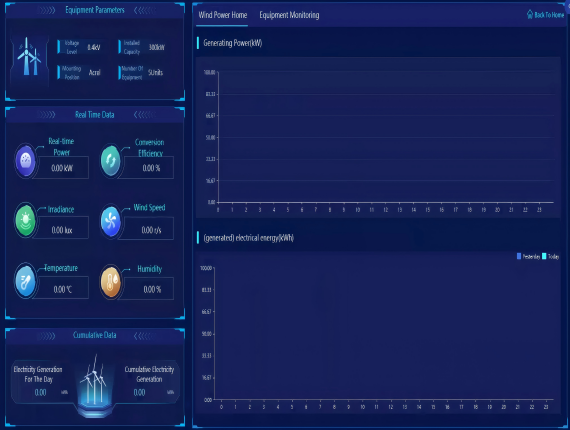
1. Measurement monitoring: Temperature, wind speed and other environmental information, DC voltage, DC current, inverter power and so on.
2. Condition monitoring: AC/DC overvoltage/undervoltage, AC/DC overcurrent, frequency above/below alarm, overtemperature, overload, leakage protection, etc.
3. Performance monitoring: Real-time power generation from wind turbines, total power generation, etc.
4. Remote control: Inverter start, stop. -
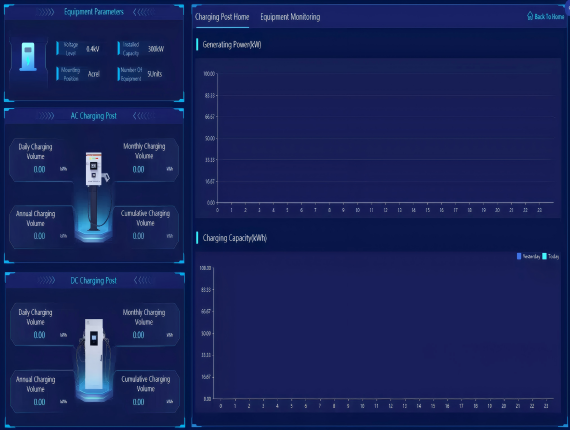
Charging system:
1) Charging monitoring
1. Measurement monitoring: Charging current, charging voltage, charging power, charging time, SOC, battery voltage, battery temperature and so on.
2. Status monitoring: Charging stack status, connection confirmation switch status, output relay status, charging interface electronic lock status.
3. Performance monitoring: Real-time charging volume during charging, floor value of the charging table, transaction records.
2) Charging control
1. Charging control: Start, Stop.
2. Remote control: Restart, upgrade.
3. Data settings: Time period parameters, emergency card list. -
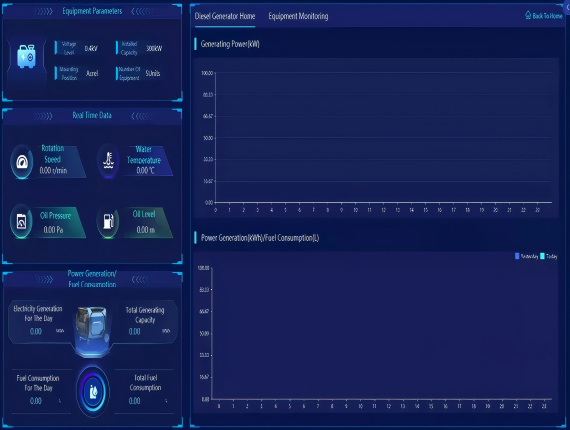
Diesel generation system:
1. Measurement monitoring: speed, water temperature, oil pressure, oil level, etc.
2. Status monitoring: Overspeed, frequency above/below alarm, overtemperature, overload, leakage protection, etc.
3. Performance monitoring: Diesel real-time power generation, total power generation, etc.
4. Remote control: Start and stop of the diesel engine. -
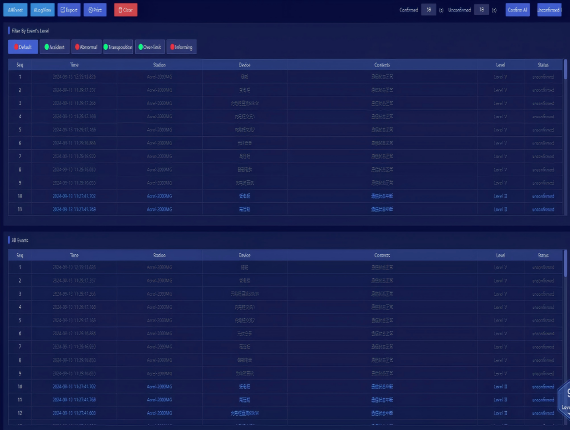
Event alert:
1) Primitive alarm
2) Alarm dialog 3) Real-time voice alarm for all incidents 4) SMS alarm to the defined mobile phone (SMS mode must match) 5) Dialing alarm to the defined mobile phone (voicemail system must match) 6) Visual and audible alarm
-
Hardware requirements
- CPU: Over 3.0 GHz
- Memory: 8 GB or more
- Hard drive: Over 500 GB
- Graphics card: Supports HDMI interface, resolution supports 1920 x 1080
-
System support
- Modbus RTU, Modbus TCP, CDT, IEC60870-5-101, IEC60870-5-103, EC60870-5-104, MQTT and other communication protocols
-
Operating environment
- Windows 10, Ubuntu, Kylin, Neos
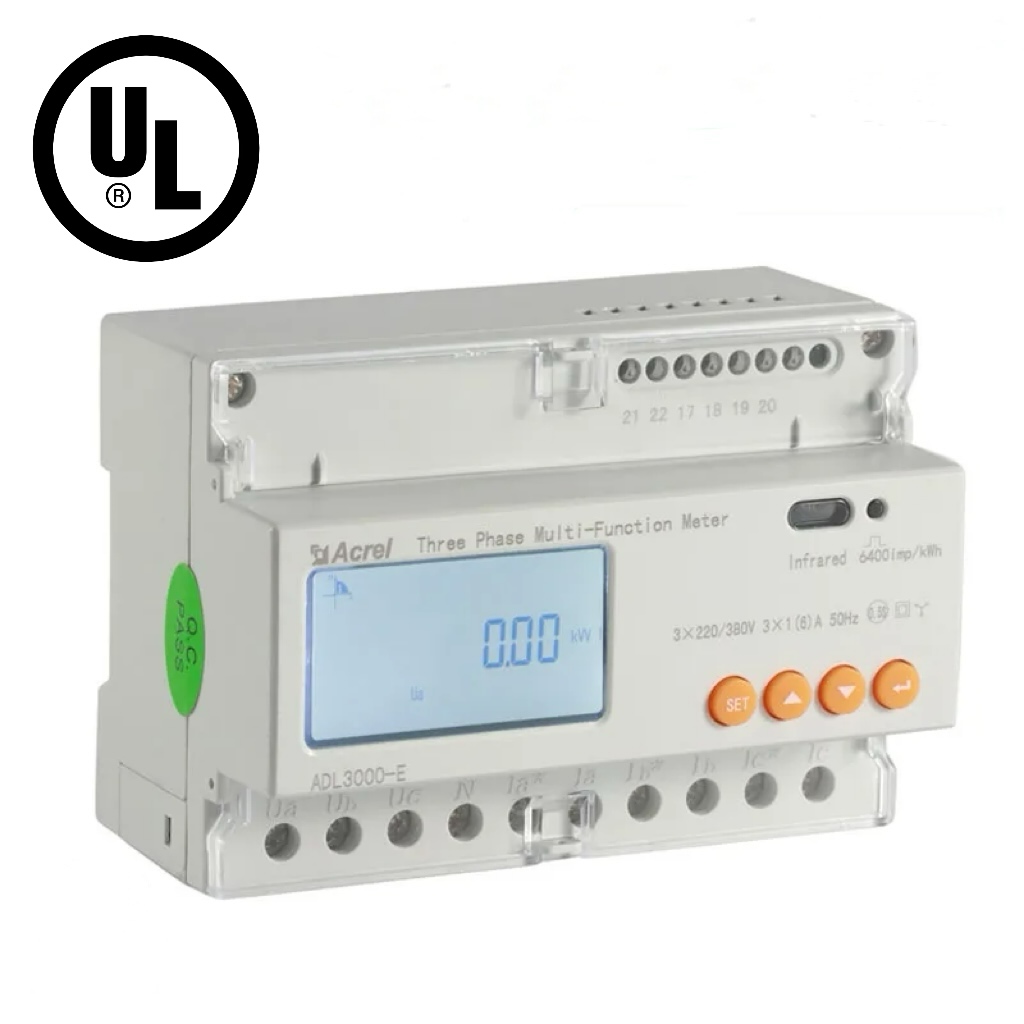
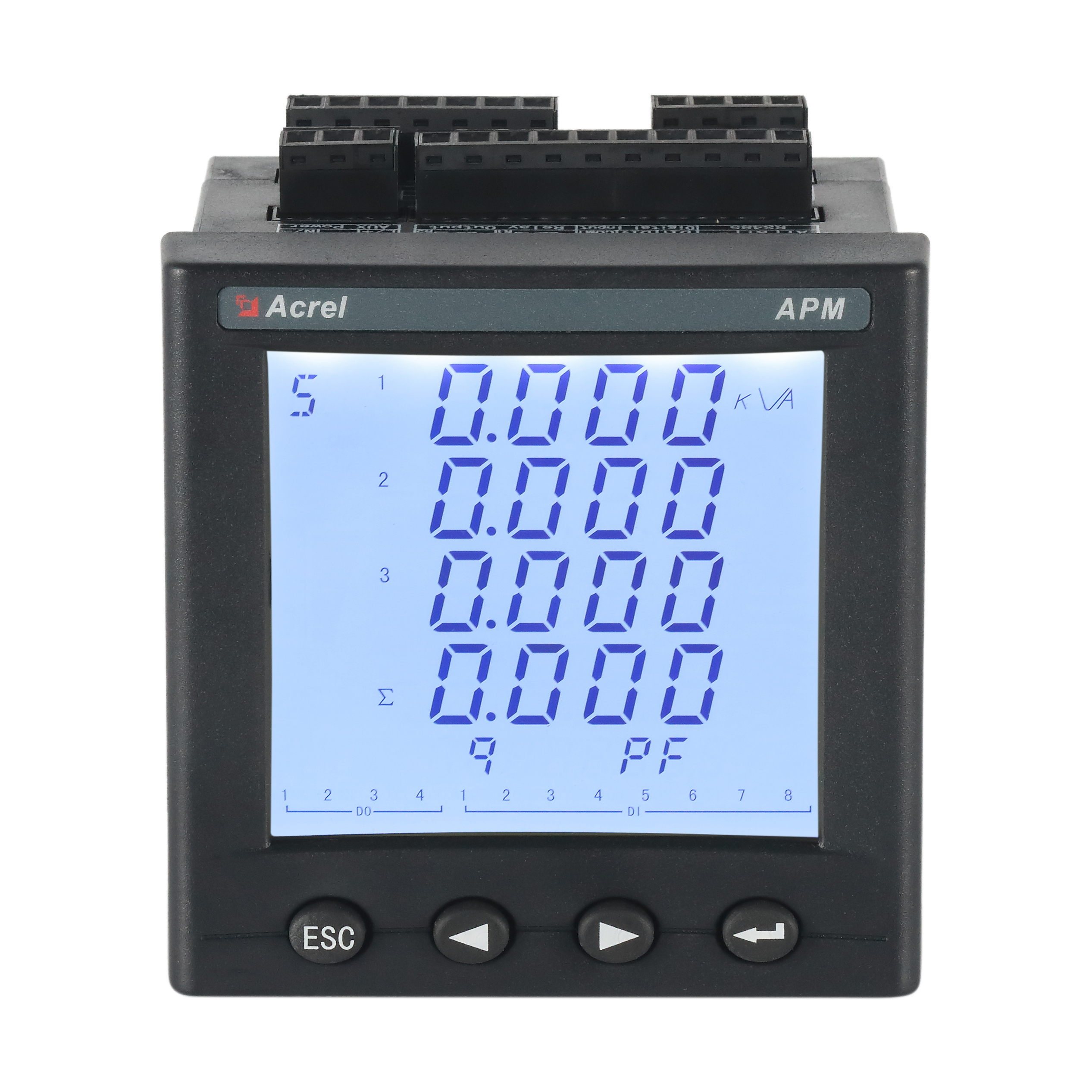
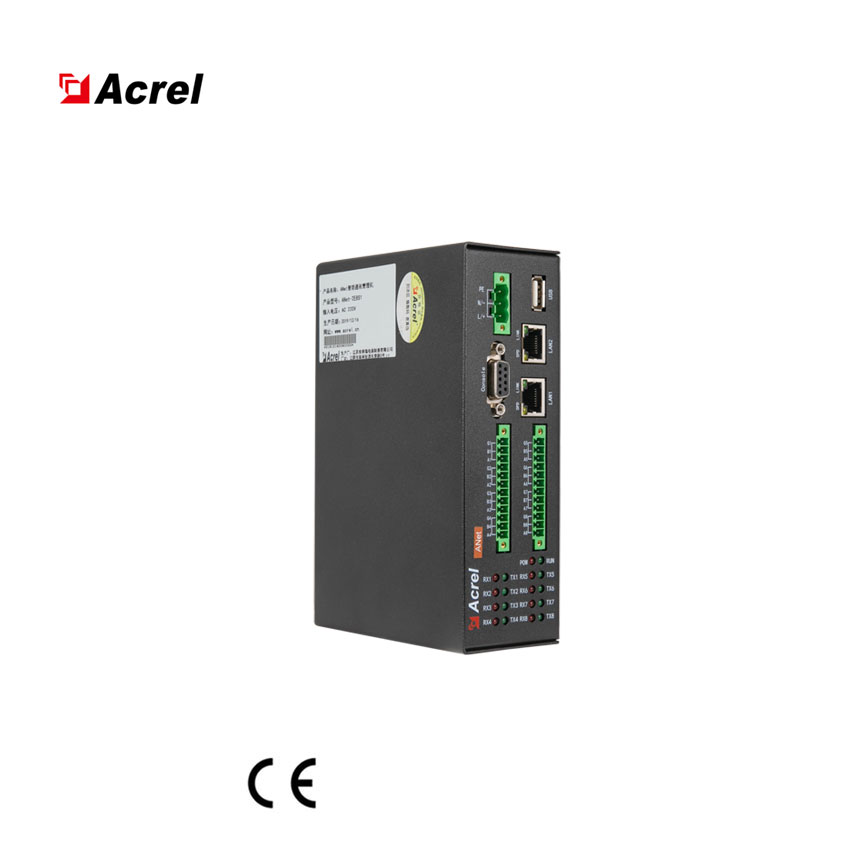
suggested products
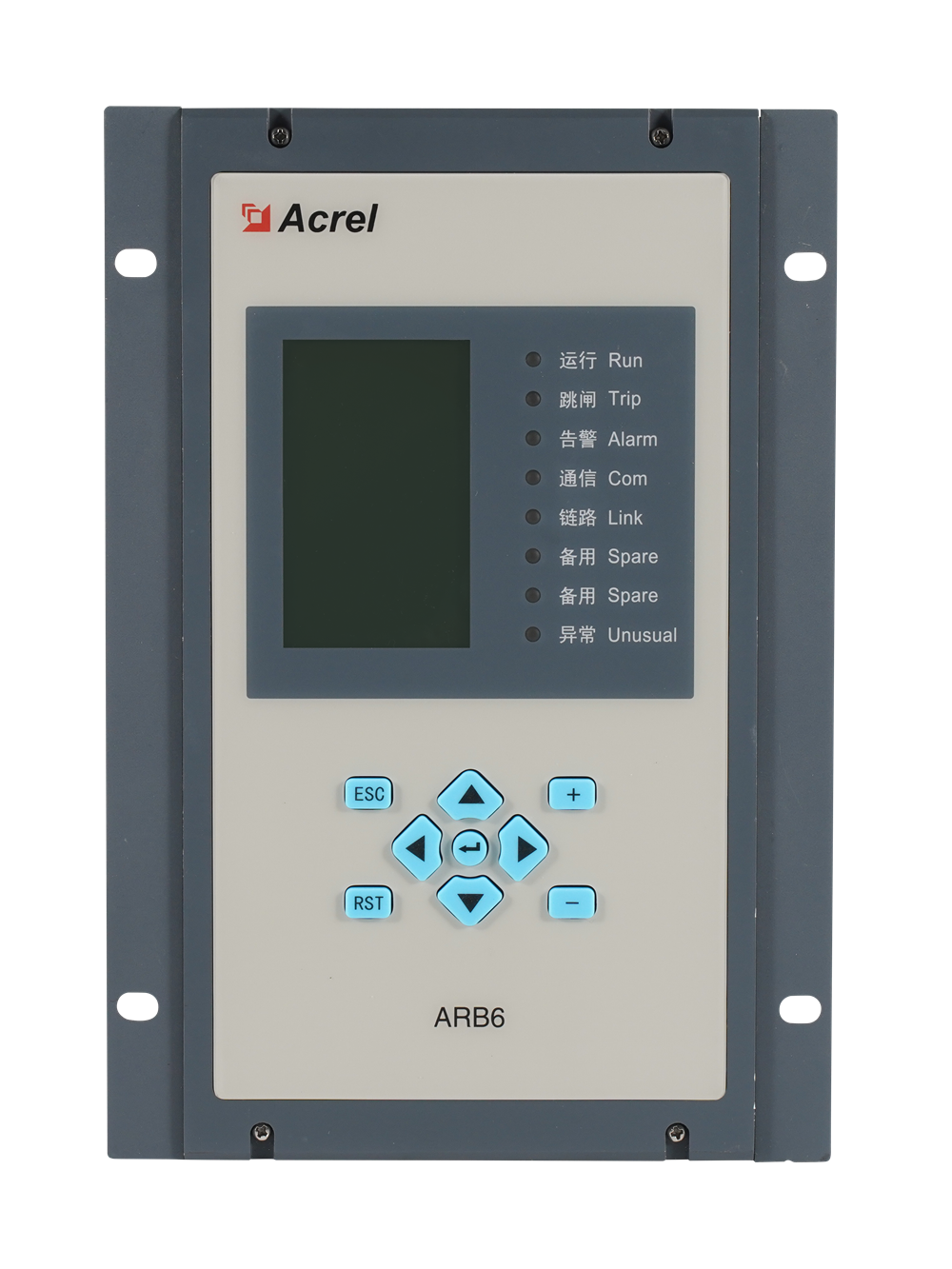
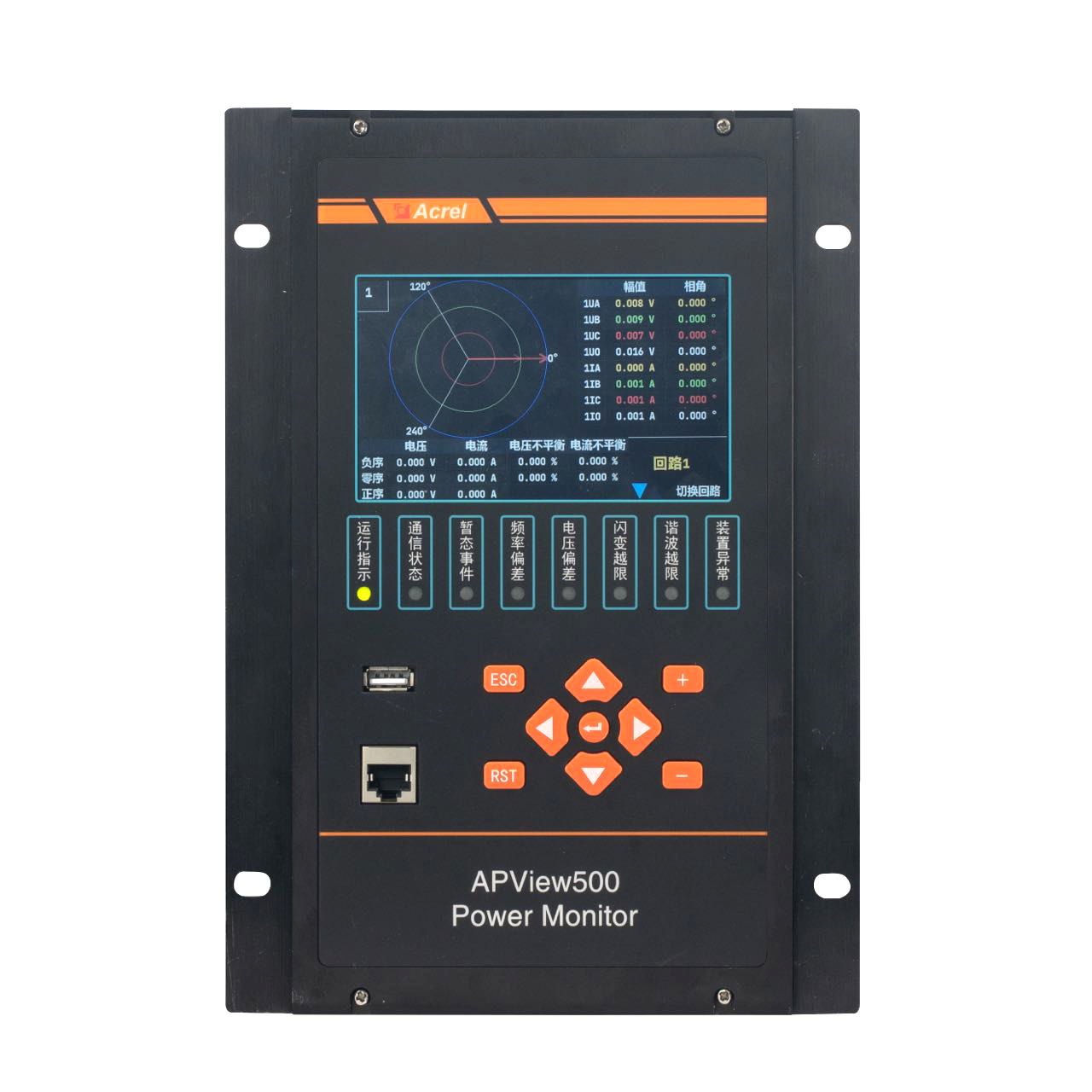
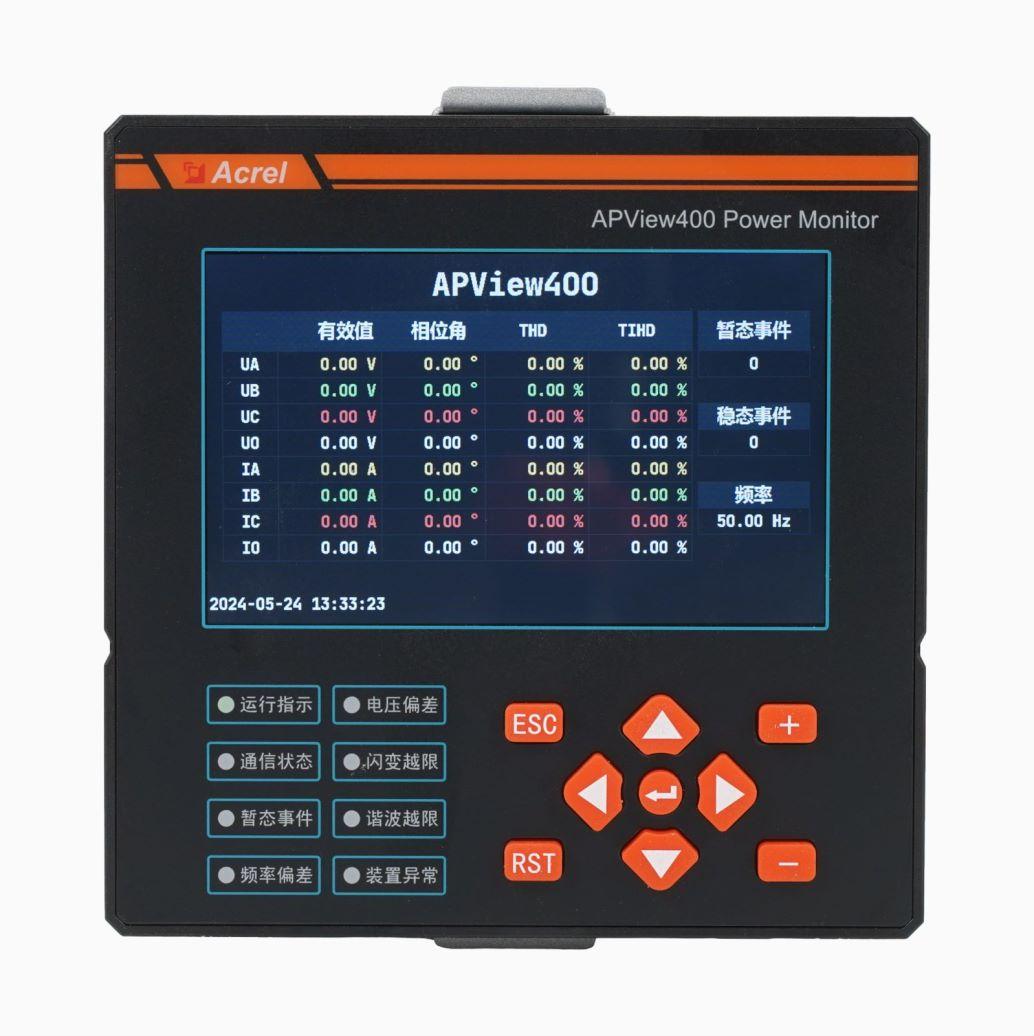
projects
After years of construction and development, Acrel has completed 14,000 energy efficiency management projects for
End consumer contracted.
-
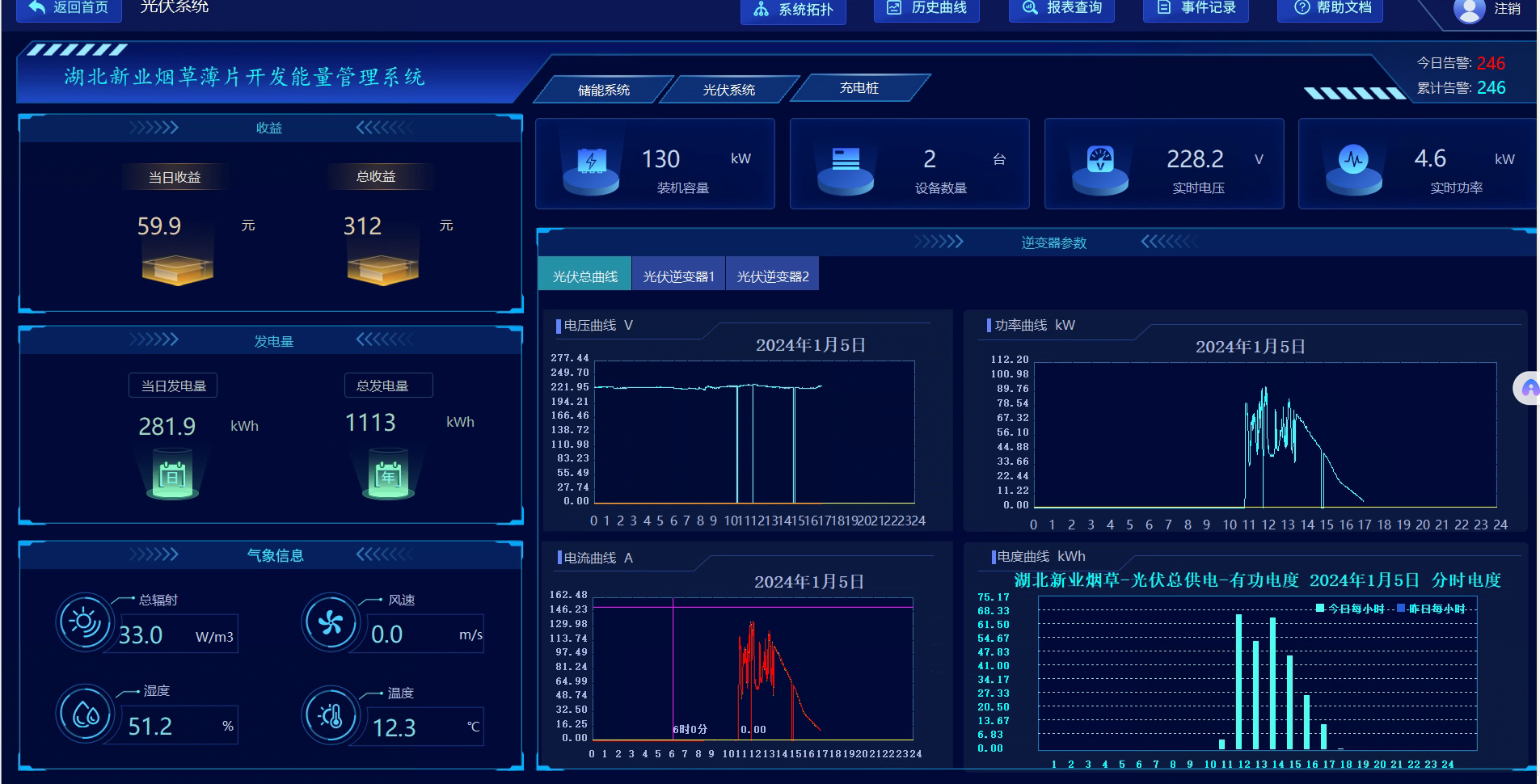
Project features: Make full use of lighting resources to achieve green energy consumption and ensure electricity consumption for charging stations, lighting, etc. Ensure the safe operation of photovoltaic systems...
2025-05-12
more
Solar storage and charging project for a tobacco company
-
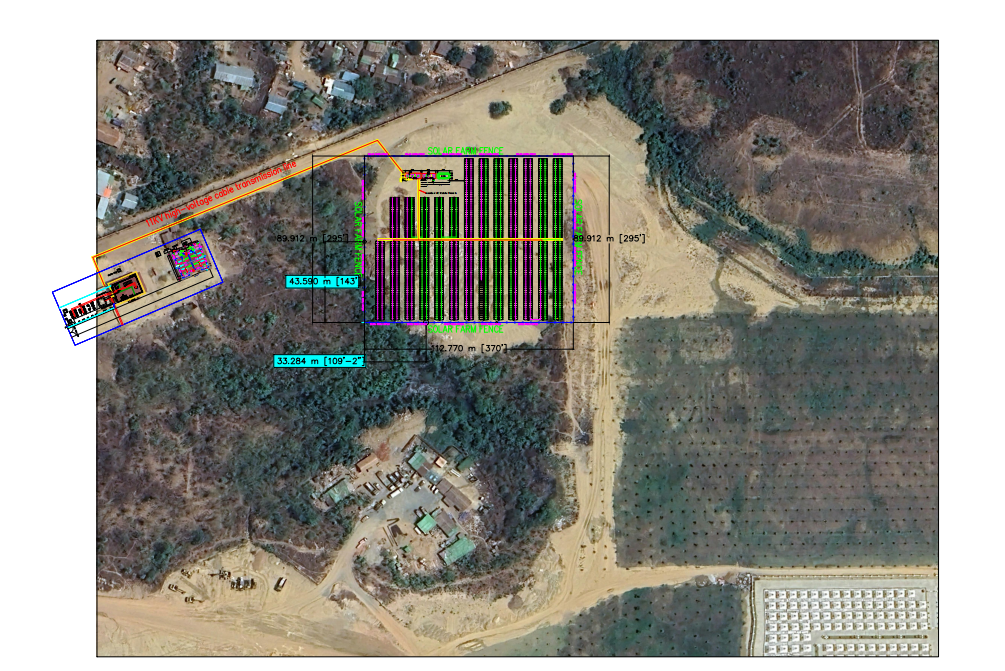
Project features: Full utilization of sunlight resources for green electricity generation; ensuring the safe operation of substations, photovoltaic systems, energy storage systems, and other facilities; ensuring normal...
2025-05-12
more
Solar energy storage project in a temple in Myanmar