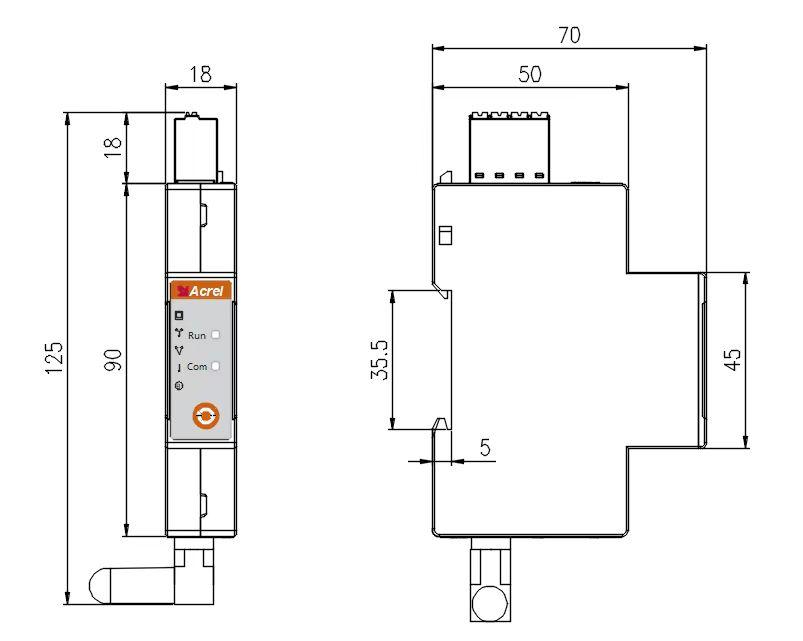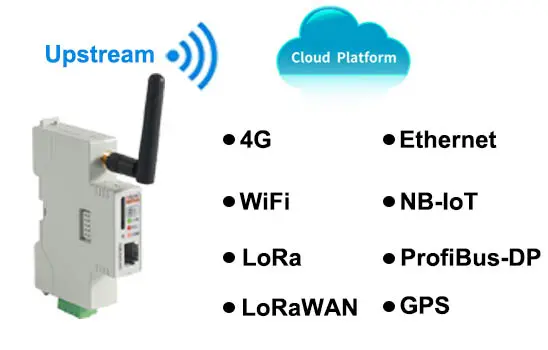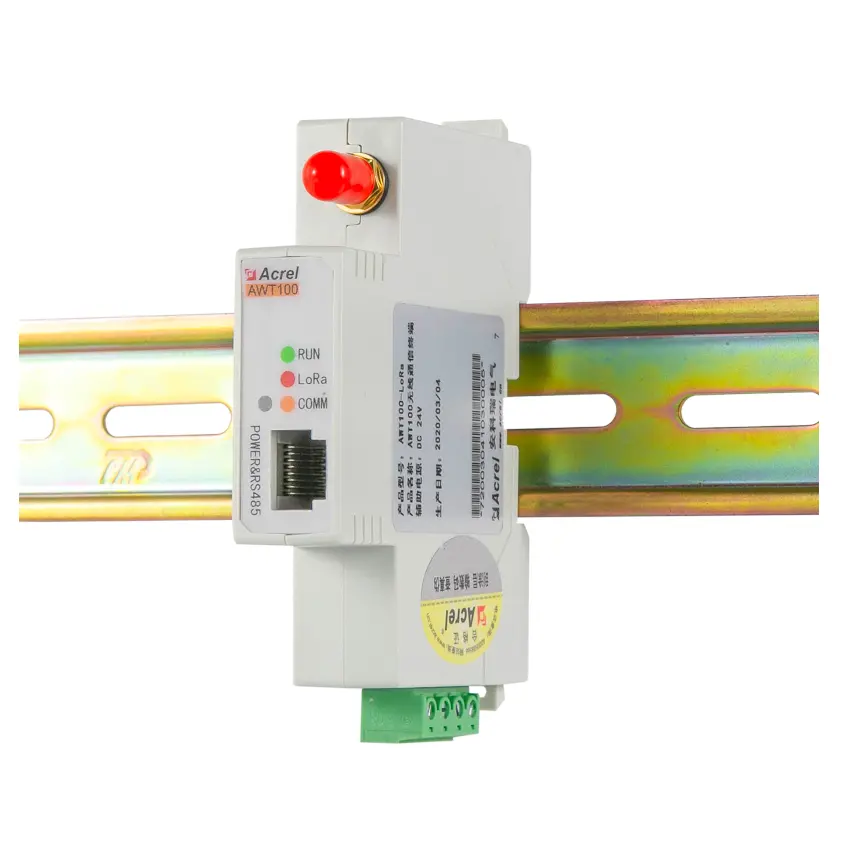























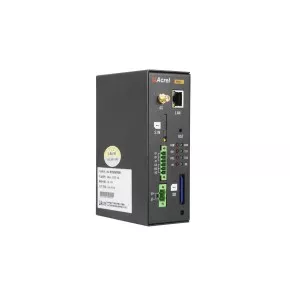
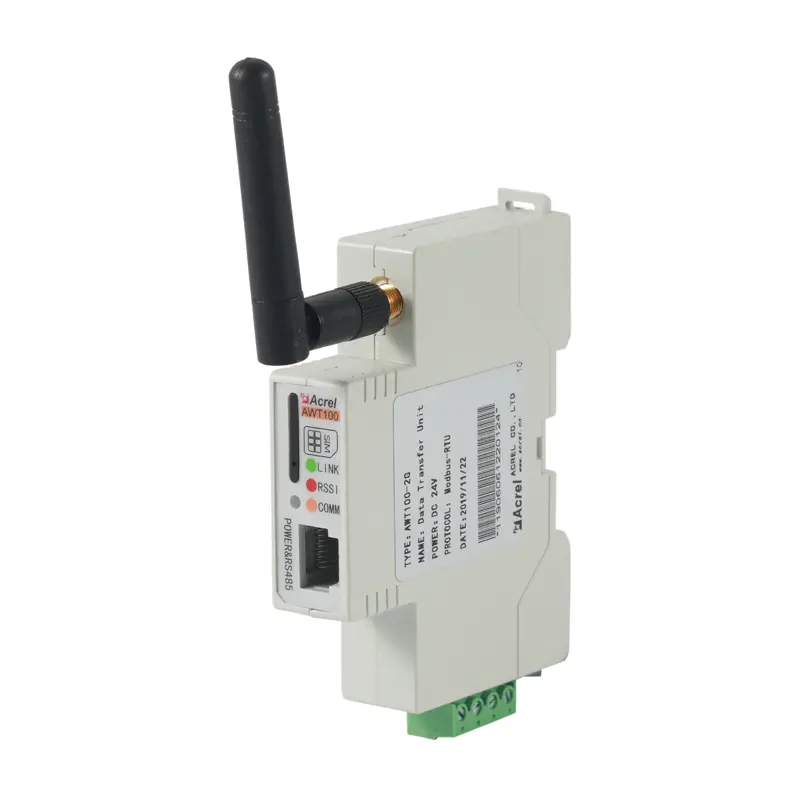
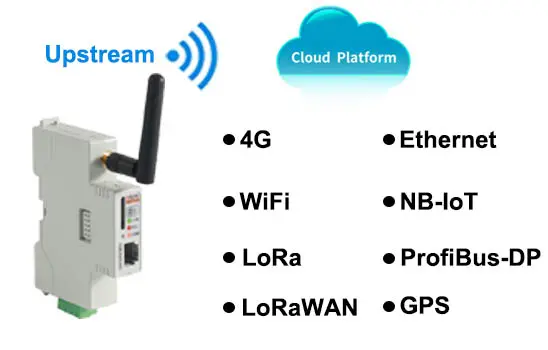
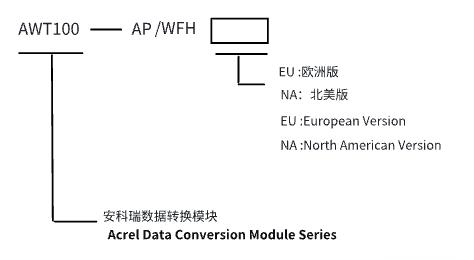
- AWT100-AP / WFH WiFi Halow DTU used in Solar PV Zero Export [Main Advantage]
[1] WiFi Halow wireless communication replaces conventional wired RS485 communication
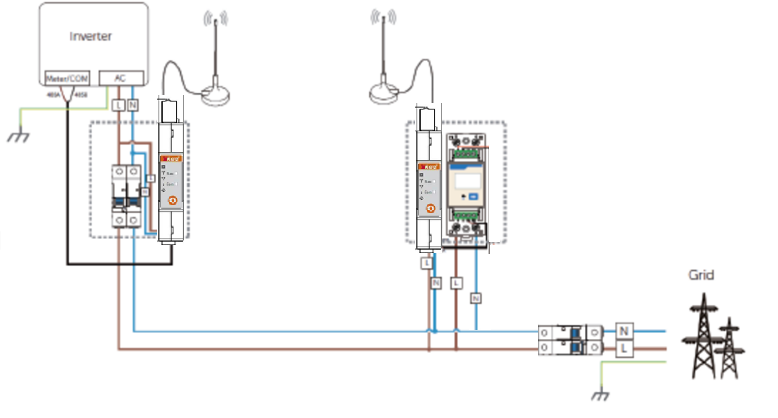
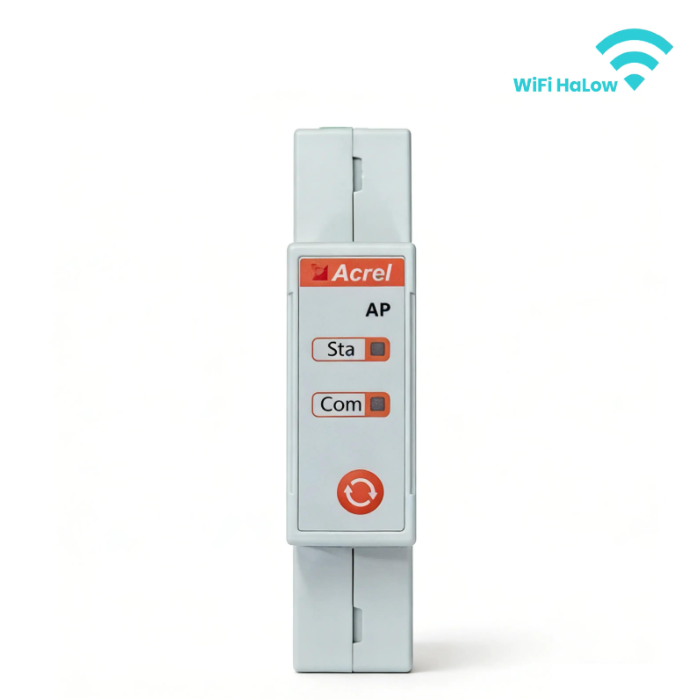
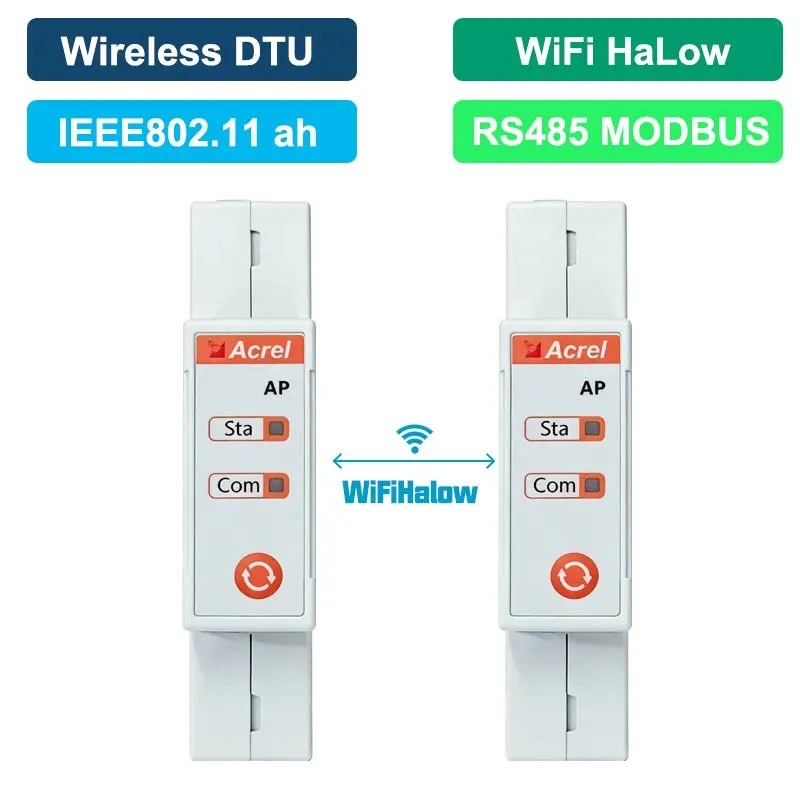
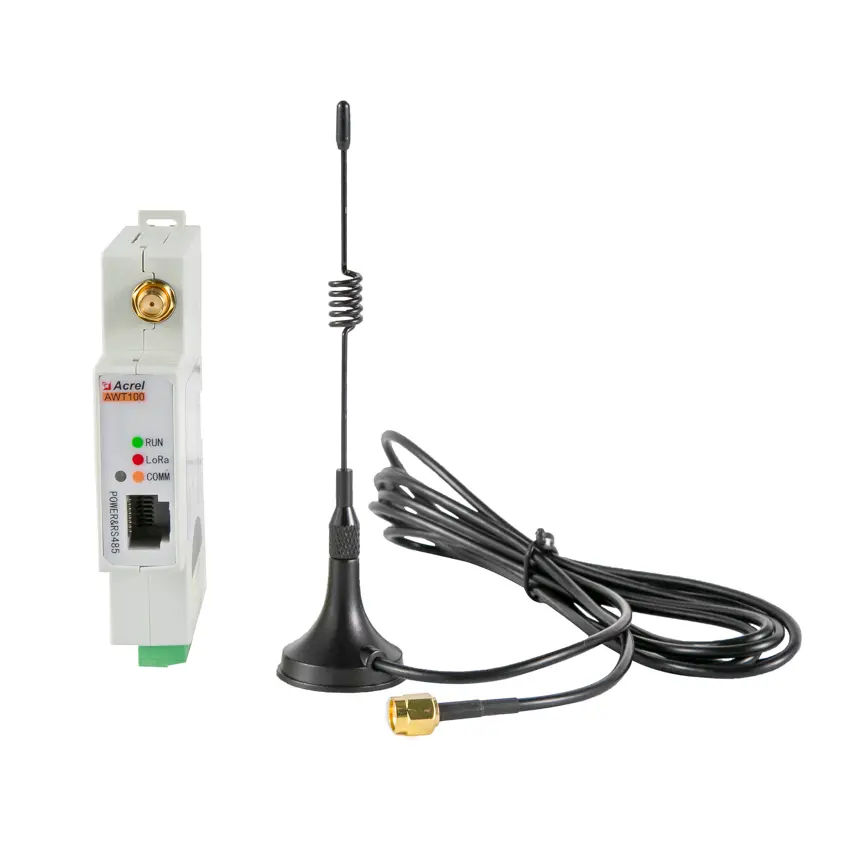
Generally, for the use of the zero-export solar PV inverter, we use RS485 wired communication between the zero-export energy meter, installed at the grid's common connection point, and the inverter, installed at the solar PV site. However, for some sites, RS485 wired communication is not a requirement. Therefore, by using one set of AWT100-AP/WFH, we convert most of the communication between the energy meter and the inverter to WiFi Halow wireless communication.
[2] Long-range and strong penetration communication
Based on WiFi HaLow (IEEE 802.11ah), the AWT100 enables a transmission distance of several kilometers with excellent wall and obstacle penetration, making it ideal for distributed PV systems and complex building environments where conventional WiFi or RS485 is limited.
[3] Reliable and stable data transmission
The device offers robust interference protection and stable communication in electrically noisy environments, ensuring continuous and accurate data exchange between energy meters, inverters and EMS platforms.
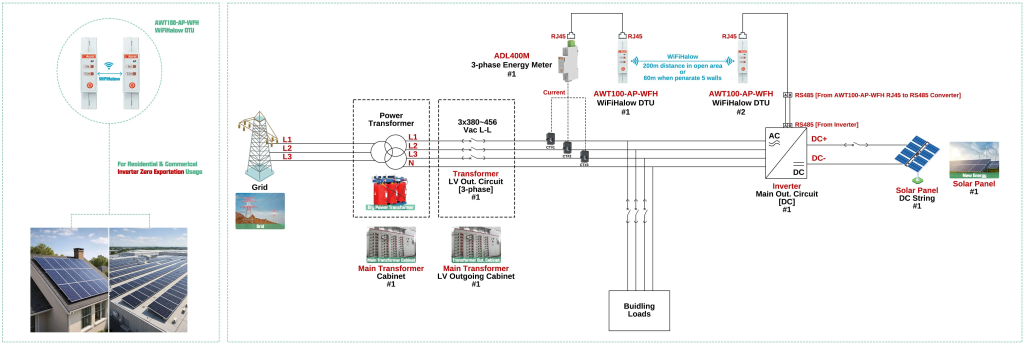
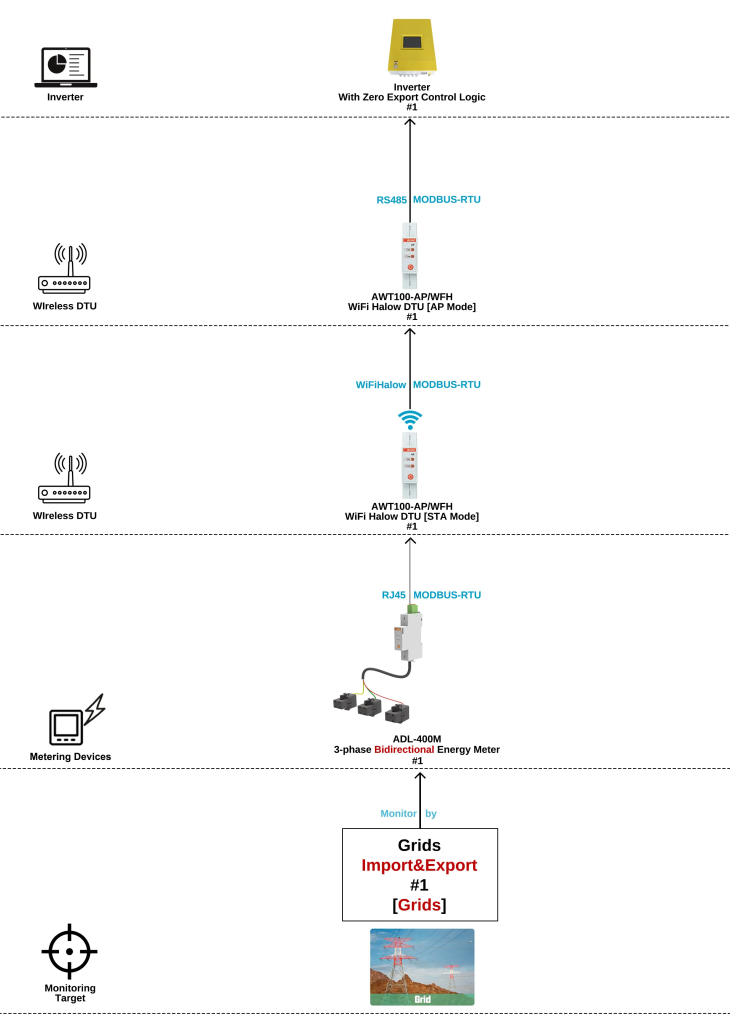
- Communication structure [Used for Solar PV Zero Export]
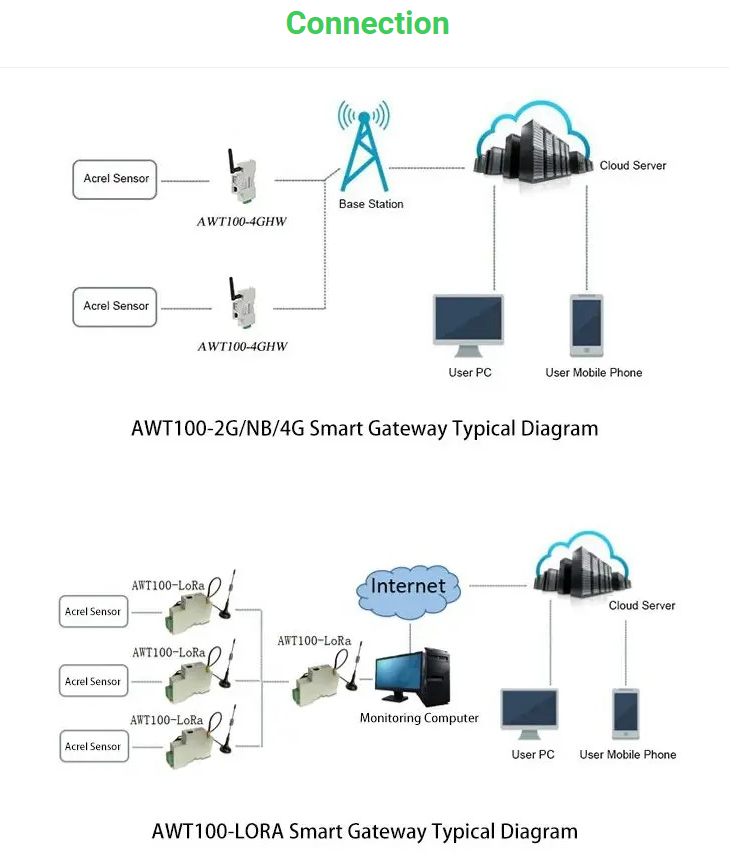
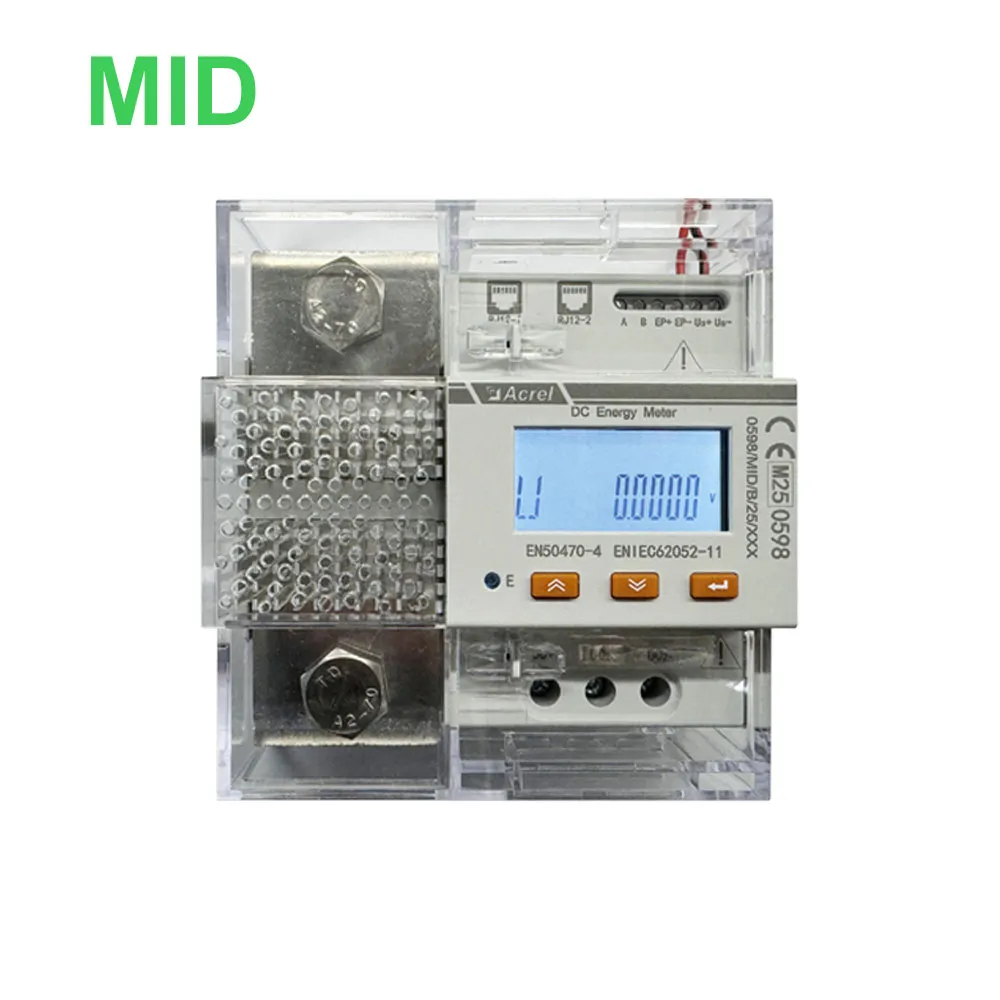
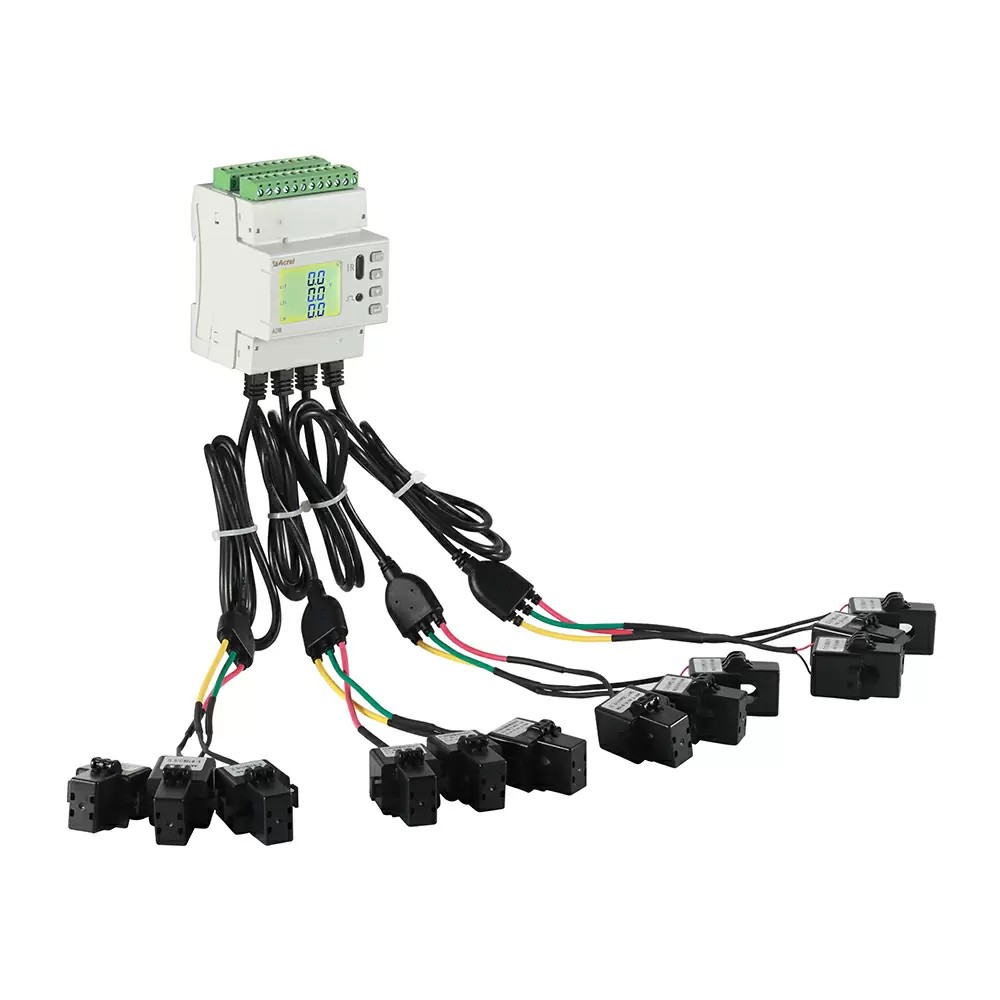
[1] Between ADL400M energy meter and AWT100-AP/WFH WiFi Halow DTU [STA mode]: We use RS485 cable communication based on the MODBUS-RTU protocol via a double-sided RJ45 connector. [Use Cat6 network cable]
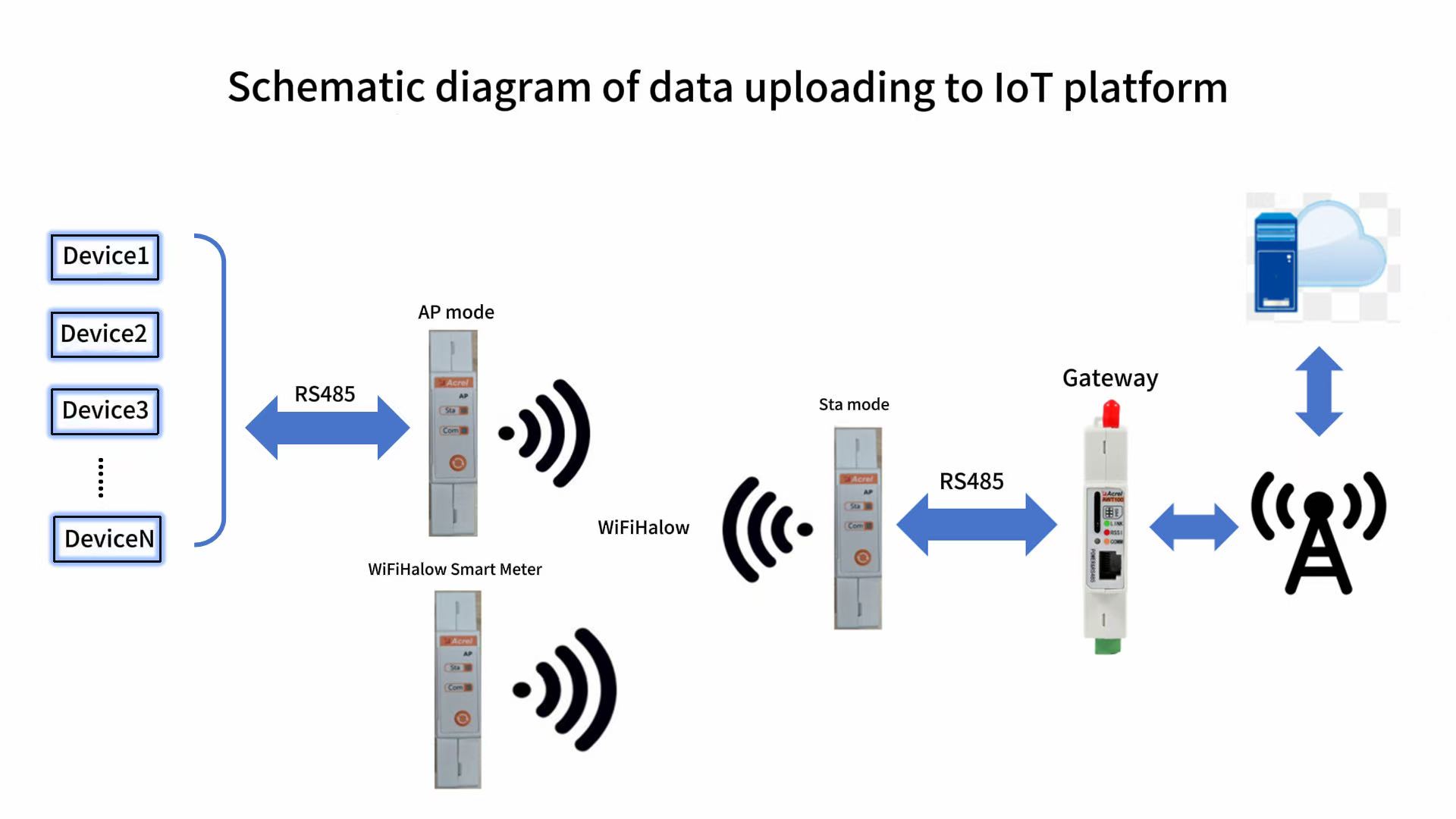
[2] Between AWT100-AP/WFH WiFi Halow DTU [AP mode] and AWT100-AP/WFH WiFi Halow DTU [STA mode]: We use WiFi Halow wireless communication based on the MODBUS-RTU protocol. [AWT100-AP/WFH can be set to either AP or STA mode for mutual WiFi Halow sharing.]
[3] Between third-party inverter and AWT100-AP / WFH WiFi Halow DTU [AP mode]: We use RS485 wired communication based on the MODBUS protocol via an RS485 port or RJ45 port. [The third-party gateway must either support an RJ45 port where pins 4 & 5 are RS485 A+ and B+ based on the MODBUS protocol, or an RS485 communication interface based on the MODBUS RTU protocol.]
- AWT100-AP / WFH WiFi Halow DTU used in EMS Power Retrofitting [Main Advantage]
[1] WiFi Halow wireless communication replaces conventional wired RS485 communication
Generally, for EMS power retrofitting, we use RS485 wired communication between the RS485 energy meter and the IoT gateway. However, for some locations, RS485 wired communication is either not required or too expensive for WiFi & 4G wireless energy meters. By using AWT100-AP/WFH sets, we therefore switch most of the communication between the energy meter and the gateway from wireless RS485 to wireless WiFi Halow communication.
[2] Long-range and strong penetration communication
Based on WiFi HaLow (IEEE 802.11ah), the AWT100 enables a transmission distance of several kilometers with excellent wall and obstacle penetration, making it ideal for distributed PV systems and complex building environments where conventional WiFi or RS485 is limited.
[3] Reliable and stable data transmission
The device offers robust interference protection and stable communication in electrically noisy environments, ensuring continuous and accurate data exchange between energy meters, inverters and EMS platforms.
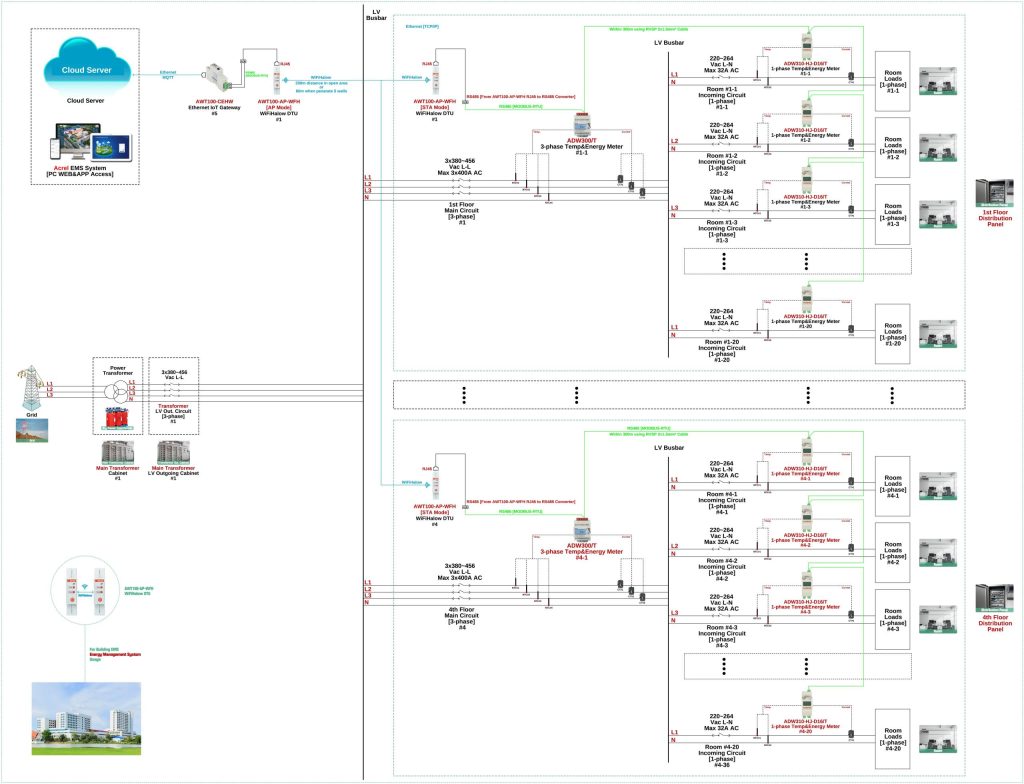
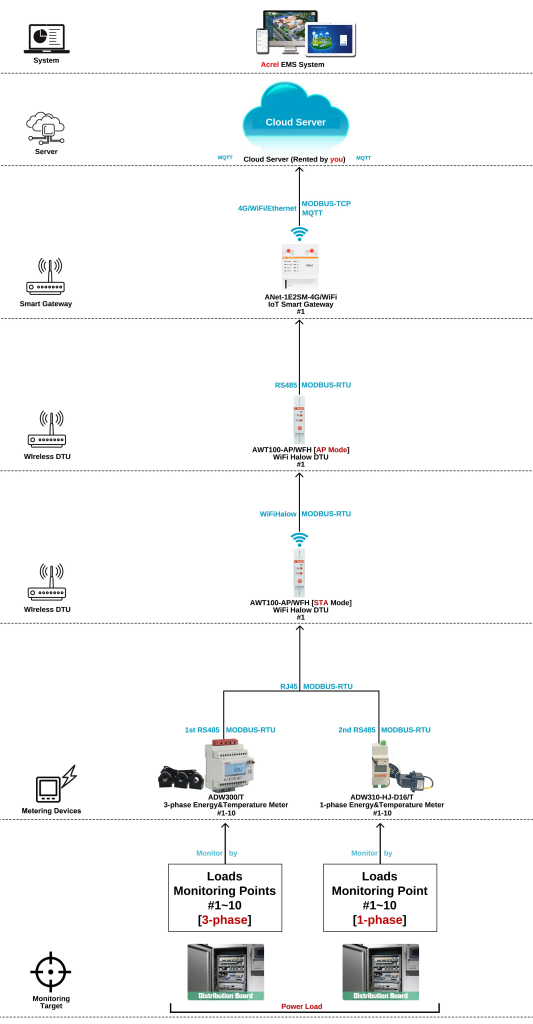
- Communication structure [used by EMS Power Retrofication]
[1] Between ADW300 and ADW310 energy meters and AWT100-AP / WFH WiFi Halow DTU [STA mode]: We use RS485 wired communication based on the MODBUS-RTU protocol. [In conjunction with AWT100-AP / WFH, there is an RJ45 to RS485 converter which is used to convert from RJ45 to RS485 interface.]
[2] Between AWT100-AP/WFH WiFi Halow DTU [AP mode] and AWT100-AP/WFH WiFi Halow DTU [STA mode]: We use WiFi Halow wireless communication based on the MODBUS-RTU protocol. [AWT100-AP/WFH can be set to either AP or STA mode for mutual WiFi Halow sharing.]
[3] Between IoT Gateway and AWT100-AP/WFH WiFi Halow DTU [AP mode]: We use RS485 wired communication between the AWT100-AP/WFH [AP mode] and the ANet-1E2SM IoT Gateway based on the MODBUS-RTU protocol. [The AWT100-AP/WFH includes an RJ45 to RS485 converter, which is used to convert from RJ45 to RS485 interface.]